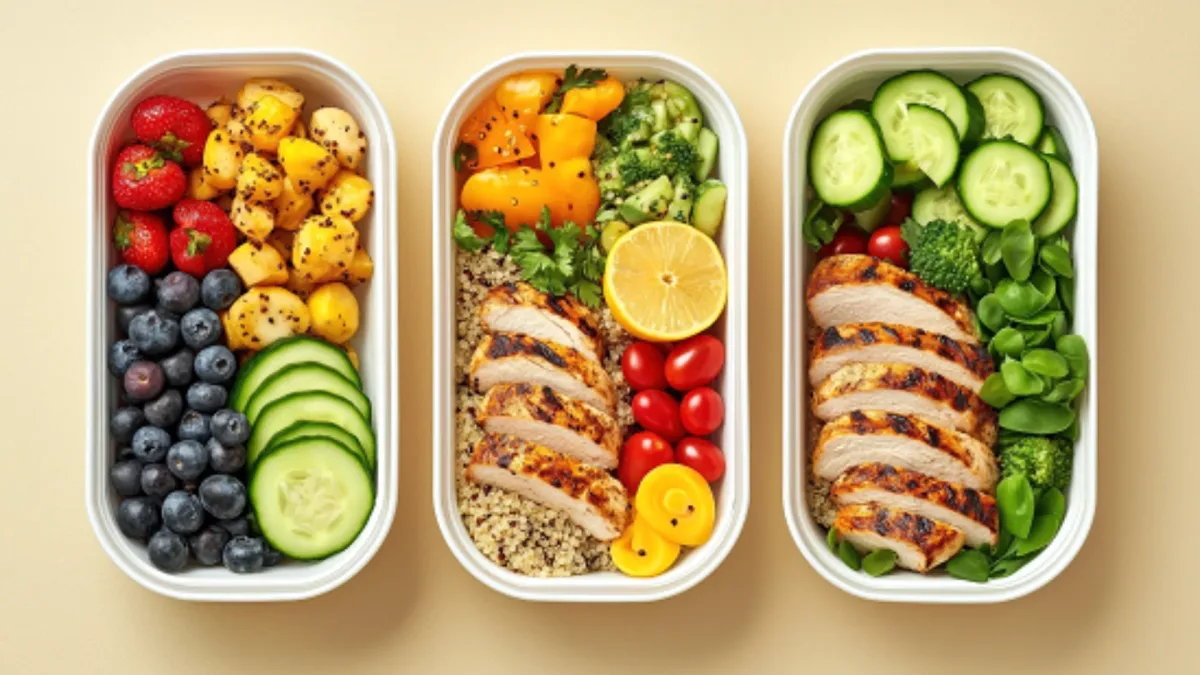
Quick answer: The easiest way to eat better all week is to have cooked protein ready before hunger hits. Shop for your protein, batch cook it, and keep two or three grab-and-go options on hand. When protein is ready, you’re far less likely to default to chips, cookies, and whatever else is within reach.
You know the drill. You’re hungry, you’re short on time, and you open the fridge or pantry hoping for a miracle.
What do you see? Chips. Cookies. A random pile of carbs.
Here’s the hard truth: when nothing nutritious is ready, convenience wins. And when convenience wins, energy dips, cravings climb, and progress stalls.
The fix is a simple mindset to start every week with: protein first. Carbs and fats still matter, and they come next. Protein is the part we plan around.
Why Does “Protein First” Work?
Protein supports several things most of us are working on:
- Fullness. A review in the American Journal of Clinical Nutrition found that higher-protein meals produce a modest increase in perceived fullness and satiety hormones (Leidy et al., 2015).
- Body composition. The same review noted that in controlled studies, higher-protein diets led to greater fat loss and better preservation of lean mass during calorie restriction than lower-protein diets.
- Sticking with the plan. The researchers also found that the benefits showed up in people who actually followed the higher-protein diet. That’s where meal prep earns its keep: it makes the plan easier to follow.
How much do you need? The International Society of Sports Nutrition (ISSN) says 1.4–2.0 grams of protein per kilogram of body weight per day (roughly 0.6–0.9 grams per pound) is sufficient for most people who exercise, with about 20–40 grams of high-quality protein per meal spread across the day (ISSN position stand). Wondering if your body can really use that much at once? See our post on how much protein your body can absorb.
Once protein is covered, round out your plate with quality carbohydrate sources and healthy fats. If you have kidney disease or another medical condition, check with your doctor about the right protein target for you.
How Do You Meal Prep Protein? The 3-Step Plan: Shop, Cook, Plan
- Shop. Grab your raw protein for bulk prep in one trip, or get it delivered.
- Cook. Batch cook it, portion it out, and store it so it’s ready to grab.
- Plan. Keep two or three grab-and-go protein options on hand for “emergency” hunger. Think Greek yogurt or cottage cheese, canned tuna or salmon, a rotisserie chicken, jerky or meat sticks, or a protein shake.
Here’s the magic: most diet slip-ups aren’t really about willpower. They’re about what’s available when you’re hungry. When protein is ready, the better choice becomes the easy choice, and staying consistent gets a lot simpler.
What Are Good High-Protein Foods to Batch Cook?
These are my go-to protein prep ideas:
No-Bean Chili. I prefer ground turkey instead of beef. Make a big pot, divide it into portions, and store them in the refrigerator or freezer. Heat one up whenever you need it.
Grilled Chicken Thighs. Don’t limit yourself to chicken. I like to grill other meats and veggies at the same time and bulk prep them together.
Japanese Curry. I prefer chicken in my curry, but you can play around with other proteins or skip the meat entirely. Add vegetables like broccoli, peas, and green beans.
Whatever you cook, make sure poultry reaches an internal temperature of 165°F.
What If You Can’t Get the “Best” Protein?
When I can, I choose top-quality protein: organic, grass-fed, local, and fresh. But if budget, availability, or convenience keeps you from that level, don’t stress. Do your best with what you have. Yes, even frozen, non-organic chicken works. Watch for sales, and remember that less-popular cuts can be a bargain, even when they’re grass-fed and organic.
The most important thing is that protein is ready when you are.
How Do You Store Meal-Prepped Protein Safely?
The USDA’s leftover food safety guidance is the place to start for batch cooking:
- Refrigerate within 2 hours of cooking.
- Use shallow, airtight containers. Dividing food into smaller portions helps it cool quickly.
- Eat refrigerated leftovers within 3–4 days. Freeze the rest. Frozen leftovers hold up for about 3–4 months.
- Label containers with the date so you know what to eat first.
I store my meals in airtight glass containers. Glass doesn’t hold onto odors or stains, and it goes straight from the fridge to the microwave. Check that your lids are microwave-safe (bamboo lids usually aren’t, so swap in a microwave-safe cover when heating). Glass can also crack with sudden temperature swings, so let frozen containers thaw in the fridge before heating.
A simple rhythm that works: cook on your prep day, eat the first portions over the next few days, and freeze the rest right away.
What’s the Best Way to Reheat Meal Prep?
- Microwave: Totally fine. All cooking breaks down some nutrients, but according to Harvard Health, microwave cooking is one of the least likely methods to damage them because the food heats quickly. Cover your food, stir or rotate it, and heat until it reaches 165°F. Bring chili and curry to a steaming boil.
- Air fryer: Great for crispier reheats, like grilled chicken thighs and veggies.
- From frozen: It’s safe to reheat frozen leftovers without thawing first. It just takes longer.
- Cold: Grilled meats from the fridge can make an easy, no-reheat meal as long as they’ve been stored properly and you eat them within the 3–4 day window. Don’t let food sit out at room temperature for more than 2 hours (1 hour if it’s above 90°F).
Protein Meal Prep FAQ
How much protein should I eat at each meal?
The ISSN’s general recommendation is about 0.25 grams of high-quality protein per kilogram of body weight, or roughly 20–40 grams per meal, spread throughout the day.
How long does meal-prepped chicken last in the fridge?
About 3–4 days, according to the USDA. Freeze portions you won’t eat in that window.
Is it OK to microwave meal prep?
Yes. Heat leftovers until they reach 165°F, and cover and stir or rotate them for even heating.
Do I have to buy organic or grass-fed protein?
No. It’s a personal preference. Even frozen, non-organic chicken is a solid way to get your protein in.
What if I’m short on time?
Start with the Plan step. Stock two or three no-cook protein options so you always have something ready.
Want Help Building Your Protein-First Plan?
Nutrition is the piece most people underestimate. If you want to see why, read why exercise alone isn’t enough for weight loss. If you’d like a plan built around your goals, schedule, and food preferences, our coaches can help with nutrition coaching.
This article is for general education and isn’t medical advice. Talk with your doctor or a registered dietitian about your specific nutrition needs.
Sources
- Leidy et al. (2015), The role of protein in weight loss and maintenance, American Journal of Clinical Nutrition.
- Jäger et al. (2017), International Society of Sports Nutrition position stand: protein and exercise, Journal of the International Society of Sports Nutrition.
- USDA Food Safety and Inspection Service, Leftovers and food safety.
- Harvard Health Publishing, Ask the doctor: Microwave’s impact on food.